

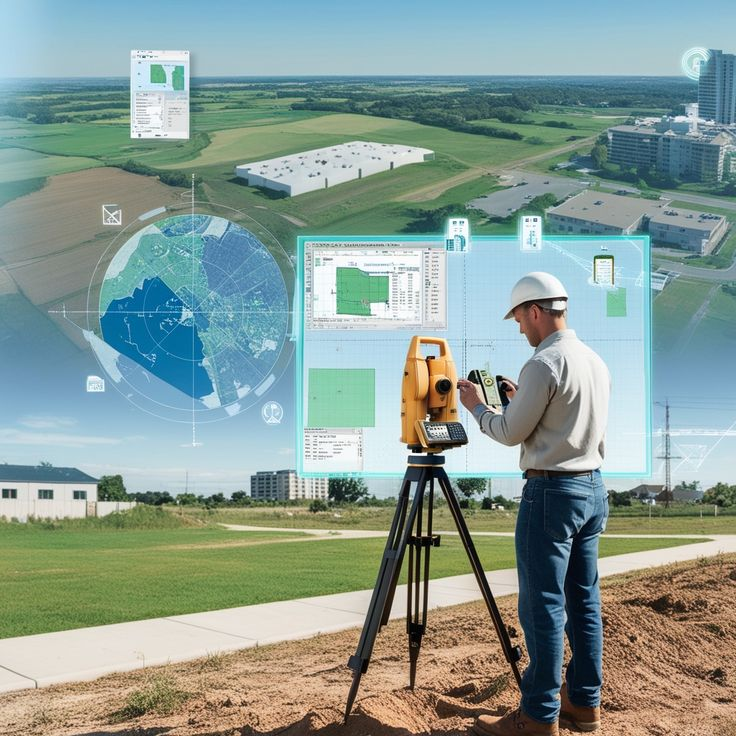
Geotechnical Survey: The Foundation of Every Successful Project
Before any structure rises—whether it’s a high-rise building, a highway, or a bridge—there’s one critical step that determines its long-term stability: the geotechnical survey. Often overlooked by those outside the construction and engineering industries, geotechnical surveys are the backbone of safe, efficient, and cost-effective project development
What is a Geotechnical Survey?
A geotechnical survey is the process of investigating and analyzing the physical properties of soil, rock, and groundwater conditions at a proposed construction site. The goal is simple but essential: to understand how the ground will behave under the weight and stress of a structure.
Unlike surface-level assessments, geotechnical surveys go deep—literally—providing insights that guide foundation design, structural integrity, and overall project feasibility
Why Geotechnical Surveys Matters
Geotechnical surveys combine fieldwork and laboratory testing to deliver comprehensive results. Some common methods include:
- Soil Sampling and Borehole Drilling
Samples are collected from different depths to analyze soil composition and strength. - Cone Penetration Testing (CPT)
A probe is pushed into the ground to measure soil resistance and stratification in real time. - Standard Penetration Test (SPT)
A widely used method that evaluates soil density and strength. - Geophysical Testing
Non-invasive techniques that use seismic waves or electrical resistivity to assess subsurface conditions. - Laboratory Analysis
Soil samples are tested for moisture content, compaction, shear strength, and other critical properties.
Applications of Geotechnical Surveys
Geotechnical surveys are essential across a wide range of industries:
- Building Construction: Ensuring foundations are designed to support structures safely.
- Roads and Highways: Assessing soil stability for long-lasting infrastructure.
- Bridges and Dams: Evaluating ground conditions to withstand heavy loads and water pressure.
- Oil and Gas Projects: Supporting drilling and pipeline installation.
- Environmental Engineering: Investigating contamination and groundwater movement.
The Future of Geotechnical Surveys
Advancements in technology are transforming geotechnical investigations. Modern tools such as remote sensing, real-time data acquisition, and AI-powered analysis are making surveys faster, more accurate, and less invasive.
As construction demands grow and urban areas expand, the importance of reliable ground data will only increase. Geotechnical surveys will continue to play a vital role in ensuring sustainable and resilient infrastructure.
Conclusion
A geotechnical survey is more than just a preliminary step—it’s the foundation of every successful construction project. By providing critical insights into subsurface conditions, it ensures safety, reduces risks, and supports smarter engineering decisions.
In a world where infrastructure must stand the test of time, investing in a thorough geotechnical survey isn’t optional—it’s essential.
.